Wolvesey Castle
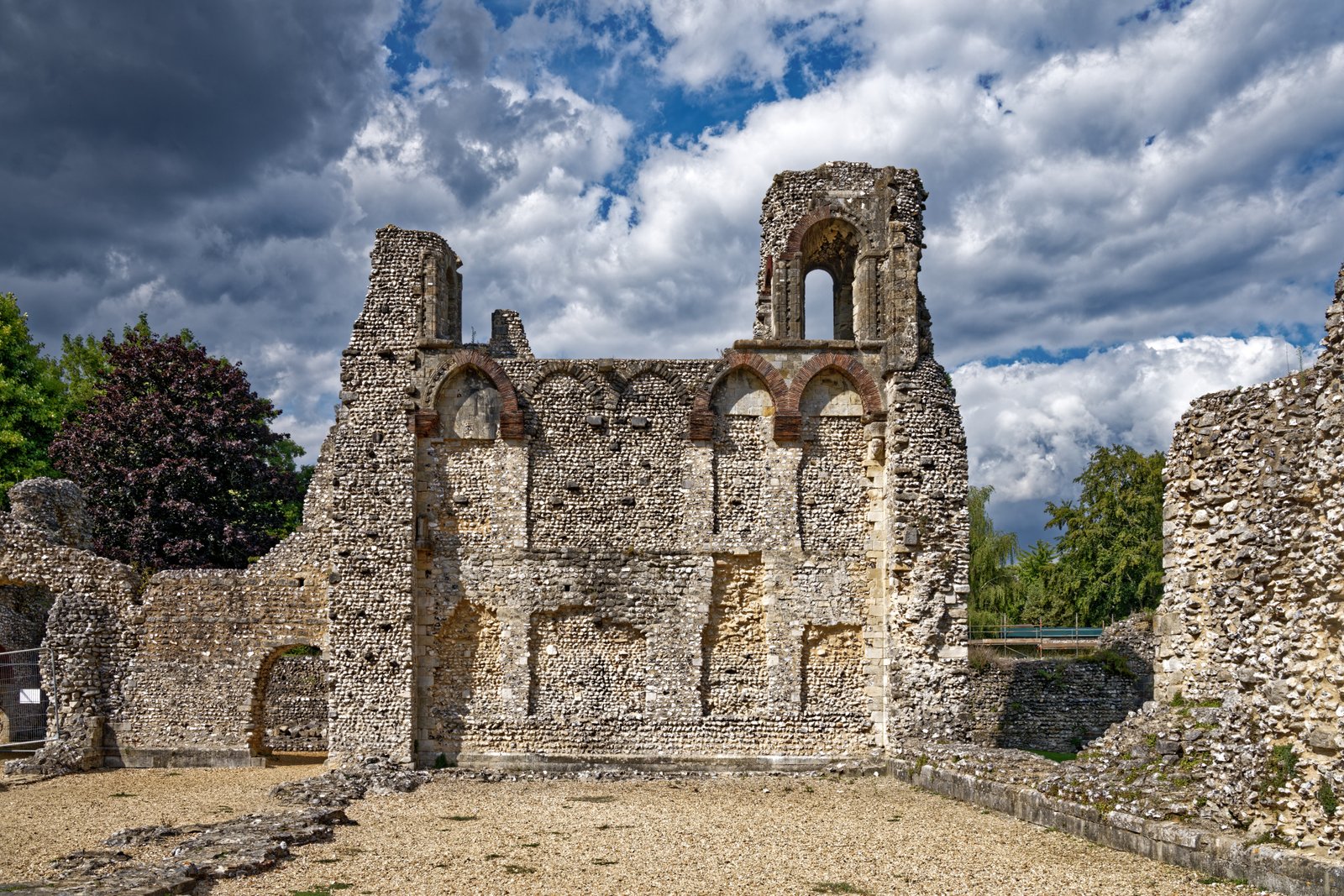
Wolvesey Castle, in Winchester, Hampshire, England, was the main residence of the Bishop of Winchester in the Middle Ages. The castle, mostly built by Henry of Blois in the 12th century, is now a ruin, except for its fifteenth-century chapel, which is now part of the bishop’s current residence, Wolvesey Palace. Wolvesey Castle was primarily a palace, although Blois had it fortified because of The Anarchy.
Early history
The site is an eyot in the River Itchen known as Wulveseye or Wulf’s island. There were buildings there during the Roman period. The building before Wolvesey Castle was constructed around 970 by Æthelwold of Winchester, the Bishop of Winchester from 963 to 984, as his official residence or palace.
William Giffard
About 1110, the second Norman bishop, William Giffard, constructed a new hall to the south west.
Henry of Blois
Giffard’s successor, Henry of Blois, brother of King Stephen added a second hall to the west between 1135 and 1138.
Winchester came under siege during the Rout of Winchester in 1141 by the Empress Matilda during the period of civil war known as The Anarchy, and held out for three weeks until relieved by Stephen’s wife, Matilda. Subsequently Henry, the brother of Stephen, King of England, enlarged and fortified the palace by building a curtain wall, giving the palace the appearance of a castle.
Later history
In June 1216, Oliver fitz Regis defended the buildings when they were besieged by Prince Louis of France during the First Barons’ War.
The palace was the location of the wedding breakfast in 1554 of Queen Mary and Philip II of Spain. It was destroyed by the Roundheads during the English Civil War in 1646. The ruins are located next to the existing bishop’s palace, and are currently owned and maintained by English Heritage.
Today
The extensive surviving ruins are currently owned and maintained by English Heritage. The ruins have had Grade I listed status since 24 March 1950. A fair amount of the curtain wall remains, but nearly all the inner arrangements are gone, though it is possible to make out the hall, in which there is a good round arch and one surviving Norman window. The castle is near the city walls, parts of which still exist today.
- Archways
- Woodman’s Gate
- View of the south end of the East Hall
- Detail of East Hall facade
- East Hall facade visible through an archway
- View of Wolvesey Castle from St Giles’ Hill


.JPG)

Baroque palace
A new palace in the baroque style was built to the south by Thomas Finch for George Morley in 1684. However, Brownlow North demolished all but the west wing of this palace in 1786. After a variety of different uses, the remaining part was refurbished for use once again as the bishop’s residence in 1926 by Theodore Woods.
The chapel is the only considerable remnant of the south range of the medieval buildings, and is still in use, being attached to the palace.
Winchester Cathedral is the cathedral of the city of Winchester, England.

Lancaster Castle is a medieval castle and former prison in Lancaster in the English county of Lancashire. Its early history is unclear, but it may have been founded in the 11th century on the site of a Roman fort overlooking a crossing of the River Lune. In 1164 the Honour of Lancaster, including the castle, ... Lancaster Castle
Eltham Palace is a large house at Eltham in southeast London, England, within the Royal Borough of Greenwich.

Leeds Castle is a castle in Kent, England, 7 miles southeast of Maidstone.

Newcastle Emlyn Castle is a ruined castle in the market town of Newcastle Emlyn in Carmarthenshire, Wales.

Portchester Castle is a medieval fortress that was developed within the walls of the Roman Saxon Shore fort of Portus Adurni at Portchester, to the east of Fareham in Hampshire. The keep was probably built in the late 11th century as a baronial castle and Portchester was taken under royal control in 1154. The monarchy ... Portchester Castle
Salisbury Cathedral is an Anglican cathedral in the city of Salisbury, England.
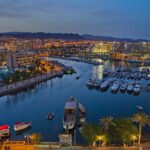
Eilat is Israel's southernmost city, with a population of 53,151, a busy port and popular resort at the northern tip of the Red Sea, on what is known in Israel as the Gulf of Eilat and in Jordan as the Gulf of Aqaba.